
Why Oakville Homes Need a Four-Season Pest Plan
Pests don’t take winters off in Oakville. Here’s what’s actually happening around your home every season and how to stay ahead of it.
Key Takeaway
- Oakville homes face active pest pressure in every season due to temperature swings, lake-effect moisture, and proximity to ravines and wooded corridors.
- A four-season pest plan inspects, treats, and monitors your home year-round, not just when unwanted pests appear.
- Spring brings ants, wasps, and rodents. Summer peaks with insects. Fall triggers indoor migration. Winter pests stay active inside heated homes.
- Older homes have settled foundation gaps. Newer builds can have unsealed construction gaps. Both let pests in.
- Prevention costs less than repeated emergency treatments and reduces damage to wiring, insulation, and stored belongings.
- Maximum Pest Control Services serves Oakville, Bronte, Glen Abbey, West Oak Trails, Kerr Village, and the surrounding GTA with local insured and bonded technicians who know neighborhood pest year-round patterns.
Oakville Has a Pest Problem Every Season
Most people think pest season means only summer. A few bugs may appear; you handle them, and then it’s over. That’s not how it works in Oakville, Ontario.
This beautiful city gets four real seasons, and pests don’t disappear when it gets cold. They adjust to the weather. In warm months they breed and forage outside. When it cools down, they shift indoors to walls, basements, attics, or anywhere it stays comfortable. Your home stays warm all year round. That makes it a target year-round.
Temperature swings hit hard here. Add lake-effect moisture and humidity shifts, and you’ve got conditions that push pests to feed, breed, and move more often than in drier parts of the province. A quick spring warm-up or a sudden fall cold snap triggers movement. Pests start looking for new shelter, and your home is right there to invade.
Geography plays a role too. Homes near ravines, parks, creek lines, and the Lake Ontario shoreline sit right next to natural pest habitat. Rodents, ants, spiders, and mosquitoes inhabit these verdant corridors. Those corridors act like direct routes to your foundation, deck, shed, or roof-line. If your lot backs onto woods or a ravine, you’re dealing with constant pressure, not occasional pest visits.
And it doesn’t matter whether your home is old or new. Older homes settle over time; foundations shift, caulking ages, small gaps open up, and pests find them quickly. Newer homes aren’t immune either. Construction gaps around utilities, vents, and framing can still let insects and rodents in if nobody seals them. The vulnerability just looks different.
What Four-Season Pest Control Actually Means
The term gets thrown around a lot. Here’s what it actually looks like in practice.
Your home gets inspected, treated, and protected every single season, not just when you spot a single bug. That means regular visits, monitoring for activity, sealing outside entry points, and treatments matched to what pests are doing right now. This is not a generic spray schedule. This is a plan that adapts to the changes in the calendar.
That’s the real difference between a seasonal plan and a one-time spray. A one-time treatment deals with what you see today, and then it’s done. A seasonal plan treats your home like a system. Ongoing prevention, monitoring, and follow-up keep pests from coming back, not just getting rid of them once.
Why does that matter? By the time you actually see an infestation, pests have usually been active for weeks or even months. They’ve already caused stress, mess, and damage. Catching activity early means less product, fewer problems, and better protection for your family and your home. Waiting for a visible problem means you’re already behind the issue.
A year-round program also reduces exposure to droppings, bites, stings, and bacteria that pests carry into kitchens, basements, and living spaces. It helps stop damage to wiring, insulation, wood, and stored belongings before it starts. And compared to repeated one-time treatments and repairs, a structured plan spreads costs across the year and cuts down surprise expenses.
What’s Happening Around Your Home Each Season
Pest activity in Oakville follows a rhythm. It’s not random. Each season brings specific threats, and knowing what to expect makes it easier to stay ahead of the game.
Spring
Snow melts, temperatures climb, and pests leave their winter hiding spots to find food, moisture, and new nesting areas. Spring kicks off the main breeding cycle for many insects and rodents, so activity picks up very fast.
Ants are usually the first sign. As soon as the weather warms, they send out scouts. They find crumbs, pet food, and moisture in kitchens quickly. Once they establish a trail, more ants follow the scent directly into cupboards, counters, and under appliances. It happens fast; one day your kitchen looks fine, the next there’s a line of them along your counter.
Wasps start nesting early too. Wasps can be found in various protected areas such as soffits, eaves, under decks, in sheds, play structures, and fence posts. Early spring nests are small, but queens build them up quickly if they’re not dealt with when discovered. Rodents also stay active in garages, which tend to stay relatively warm and often hold stored items, bird seed, or pet food.
Watch for these signs as the weather turns:
- Ants trail along counters, baseboards, or near pet food
- Wasp activity around rooflines, soffits, weep holes or under decks
- Fresh rodent droppings in garages or storage areas
- Gnaw marks on packaging or wood near entry points
- Small soil mounds near the foundation or damaged window screens
Summer
The summer season brings with it warm temperatures, longer days, and higher humidity levels. It’s ideal for breeding and feeding. As populations grow outdoors, more pests spill over toward homes, decks, and outdoor living spaces. Summer is when it gets busy with action.
Ants, wasps, hornets, spiders, earwigs, flies, and mosquitoes are all showing up. Wasps and hornets become aggressive as colonies grow larger in midsummer; they work harder to protect their nest, food, and developing brood. When heat is added and people spend time on patios, the number of encounters increases.
Carpenter ants deserve a closer look. Damp or damaged wood is their go-to. They typically target areas such as window frames, decks, fence posts, roof-lines, and structural timbers. They may also set up satellite nests inside dry-walls near kitchens or bathrooms where moisture is present. Unlike most regular ants, carpenter ants can cause structural damage over time.
Mosquitoes vary by neighborhood. Areas near standing water, ravines, or poorly draining yards support more breeding. Clogged gutters, bird baths in the backyard, and containers with stagnant water on your property add to it. A small change, like draining a container or cleaning a gutter, can make a noticeable difference.
Fall
This is when things shift indoors. Temperatures drop, and pests need sheltered places to survive winter. Your home offers warmth, food, and stable conditions that exposed outdoor sites just can’t match.
Mice and rats enter homes before winter because they instinctively look for secure nesting spots and reliable food sources before the cold season hits. Small gaps around doors, utility lines, and vents give them straightforward access into warm interior spaces in your house. It doesn’t take a big opening; if you can fit a dime through it, a mouse can get through it.
If you start hearing noises, pay attention. Light behind the walls scratching, scurrying, or chewing, especially at night. These noises typically occur near ceilings, behind appliances, or along baseboards. Those sounds add up, and they usually mean something is already inside.
Other fall signs that pests are already in:
- Droppings near food storage, behind the stove or under cabinet bases
- Chewed packaging in pantries or storage areas
- Cobwebs or dead insects clustering near windows
- Unusual pet acting behavior near certain walls or rooms in the house
- Overwintering insects gathering on sunny window sills all of the sudden
Winter
Many people assume pests go dormant in winter. They remain active inside a heated home. Many pests slow down outdoors, but inside they keep going. Rodents, cockroaches, and certain spiders can stay active all winter if conditions are right for them.
Cockroaches need warmth and moisture to thrive. Kitchens, bathrooms, furnace rooms, and laundry areas become their go-to spots when it’s cold outside. Winter pushes them to concentrate even more in those areas. Basements and attics attract overwintering pests for similar reasons: they are quiet, low-traffic, have stable temperatures, and have plenty of hiding spots to stay away from house pets and human interaction.
Clutter worsens it. Cardboard boxes, fabric piles, and stacked items give pests endless hiding, nesting, and travel routes. It also makes it harder to spot problems early. If you’re storing things in the basement through winter, strong sealed bins are worth the upgrade.
How Maximum Pest Control Program Works
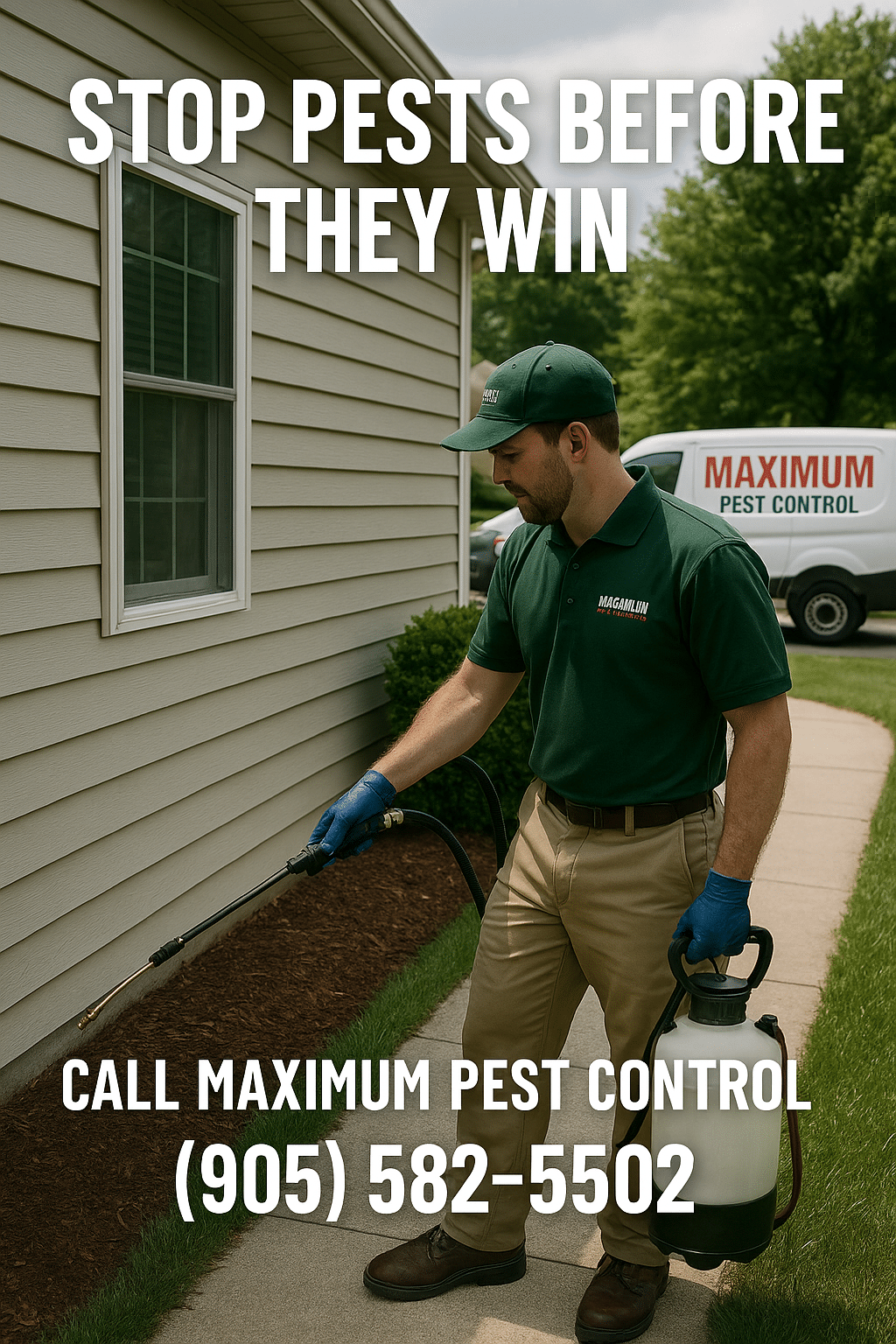
The program starts with an inspection—a technician walks through your home, inside and out, looking for pest activity, entry points, and anything that might be contributing to a problem. They document what they find and talk through your concerns and any past issues.
The technician checks foundations, door frames, utility lines, vents, roof-lines, garages, and sheds. The technician notes any gaps, cracks, damaged screens, or structural defects that could allow pests to enter. After the inspection, you get a clear picture of what pests are present, where they’re getting in, and what’s attracting them, along with recommended treatments, sealing work, and a proposed seasonal schedule.
If there’s an active infestation when you start, a clean-out treatment comes first. That quickly brings pest numbers down and stabilizes things before moving into lighter, maintenance-style seasonal visits. It creates a solid starting point rather than trying to maintain a plan while an existing problem is still running.
After that, visits are timed to spring wake-up, summer peak, fall migration indoors, and winter monitoring. The focus shifts each season: rodent-proofing in fall, insect barriers in spring and summer, and overwintering checks in winter. Technicians update treatment areas and products based on what they actually find at your property. Not a generic checklist.
The monitoring process continues even in between visits. Traps, stations, or visual indicators in key locations track where pests are traveling or nesting. That data lets technicians adjust placement and treatment over time rather than guessing.
If a covered pest issue comes up between scheduled visits, you contact Maximum Pest Control Services, and they’ll work through follow-up under the program’s warranty terms. Clear guarantees, defined coverage periods, and no ambiguity about what happens if something comes back.
What the Program Covers
The residential program handles ants, spiders, cockroaches, bed bugs, mice, and rats. Carpenter ants get specialized treatment because of the structural damage they can cause. Rodent control removal, exclusion recommendations, and targeted methods are built into the seasonal work.
Inside the home, technicians focus on high-risk areas: kitchens, bathrooms, basements, laundry rooms, utility rooms, and garages. Bedrooms and living areas get treated as needed based on findings. Interior work is targeted, not blanket, which reduces chemical use while still delivering results.
Outside, barrier treatments go around foundations, entry points, window and door frames, and other perimeter zones. Decks, sheds, and structures close to the home get extra attention. Sealing gaps is part of the strategy too; fewer openings mean fewer treatments needed, and it makes it harder for pests to return once they’ve been removed.
Wildlife like raccoons, or more complex issues like severe bed bug infestations, may need separate extra programs. Different techniques and pricing apply for those cases.
What You Can Do Between Visits
The program does the heavy lifting, but a few habits on your end make a real difference. None of this is complicated—it’s more about consistency than effort.
Spring and Summer
- Deep-clean kitchens, especially around appliances and under cabinets
- Fix moisture issues, leaky faucets, poor drainage, wet spots
- Seal small gaps around doors, utility lines, and vents
- Tidy garages and sheds, especially stored food or bird seed
- Keep yard debris and clutter away from the foundation
- Clean up food and drink spills right away outdoors
- Keep garbage lids closed and drain any standing water
Fall and Winter
- Seal cracks and repair weatherstripping before the cold sets in
- Store food in strong sealed containers not original packaging
- Organize storage spaces, especially basements and the garage
- Clean gutters and remove debris near foundations
- Switch cardboard boxes to sealed bins for winter storage
- Vacuum regularly and manage moisture in kitchens and bathrooms
Is This Right for Your Home?
Families, seniors, pet owners, and anyone who wants consistent pest management benefits from a year-round pest control service program. Homes with previous pest issues or vulnerable occupants especially appreciate the extra protection. If pests have lived comfortably in your home before, the conditions that attracted them likely still exist. Ongoing monitoring reduces the likelihood of repeat unwanted infestations.
Properties backing onto ravines, parks, and wooded areas face higher ongoing exposure. A four-season plan manages that constant pressure more effectively than reacting season by season.
Some signs that a year-round program makes sense for your situation: frequent pest sightings, recurring seasonal issues, droppings or gnaw marks you keep finding, or repeated emergency calls. If any of those sound familiar, it’s worth a conversation.
Why Contact Maximum Pest Control Services in Oakville

Maximum Pest Control Services is locally owned and Canadian. That matters more than it might sound. Local technicians understand the local neighborhood-specific pest patterns, which areas see more rodent activity, where wasp nesting tends to concentrate, and how the ravine corridors affect things in your part of town. That knowledge lets them anticipate seasonal shifts and tailor treatments precisely, rather than running a national playbook that doesn’t account for local conditions.
They offer fast response times, friendly communication, competitive rates, and direct access to experienced, licensed, insured, and bonded technicians. Maximum Team serves residential clients across Oakville and the Greater Toronto Area, including Bronte and surrounding neighborhoods, with a local office and service team right here.
Service options range from one-time treatments and clean-out services to maintained residential programs for all four seasons. Quotes are available before committing; no pressure, no guesswork about pricing.
Common Questions Customers Ask
Why do homes in Oakville deal with pest problems all year?
It gets four real seasons, and pests don’t disappear when it gets cold. They adjust to it. In warm months they breed and forage. When it cools down, they shift indoors to walls, basements, attics, or anywhere it stays safe and comfortable. Your home stays warm year-round, and that makes it a target year-round.
What does four-season pest control actually mean?
It means your home gets inspected, treated, and protected every single season, not just when you spot some bug. It involves regular visits, monitoring, sealing outside entry points, and applying treatments that align with the current activities of pests. That’s the difference between reacting and preventing.
How is a seasonal plan different from a one-time spray?
A one-time spray deals with what you see today, and then it’s done. A seasonal plan treats your home like an ongoing scheduled system. Ongoing prevention, monitoring, and follow-up keep pests from coming back, not just getting rid of them once.
Why do pests try to move indoors in the fall?
Temperatures drop, and pests need sheltered places to survive winter. Your home offers warmth, food, and stable conditions that exposed outdoor sites just can’t match.
Is the four-season pest plan worth the cost?
Preventing infestations costs less than repeated one-time treatments and repairs from damage. A structured plan spreads costs across the year, reduces emergency calls, and keeps your home protected when it matters most.
Which Oakville neighborhoods does Maximum Pest Control Services serve?
Maximum Pest Control Services serves residential clients across Oakville, including Bronte, Glen Abbey, West Oak Trails, Kerr Village, West Morrison Creek, and Old Oakville surrounding neighborhoods, with a local office and a trained and educated service team in the area.