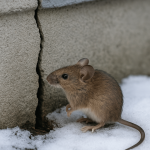

Mice Nesting in Burlington Homes During February
Winter Pressure in Burlington Homes
With winter firmly established here in Burlington, mice are looking for warmth and a food source. Particularly, February with the additional snow accumulation and long nights, and your home as a place to escape the elements is the perfect environment for them to do so. This makes it crucial to prevent mice nesting in Burlington homes during this season.
Mice are small, quick, and clever animals. Mice will take advantage of any opening, the size of a dime, and they reproduce quickly. If you have never dealt with a rodent issue before, this could be the month.
Risks of Waiting Too Long

Rodents do not require much of a living environment in your home. All it takes is some crumbs, a warm attic, and some insulating materials to create an ever-expanding breeding population.
In a single year, a female mouse can experience upwards of 60 babies. And since babies can reproduce at as soon as 2 weeks old, ultimately your population could double or triple before you ever hear the first scratch behind your wall.
Taking proactive measures to address potential issues with mice nesting in Burlington homes can save you time and money in the long run.
The longer you wait, the more complicated and expensive the problem will become.
Signs to Look For when Mice are Nesting in Your House
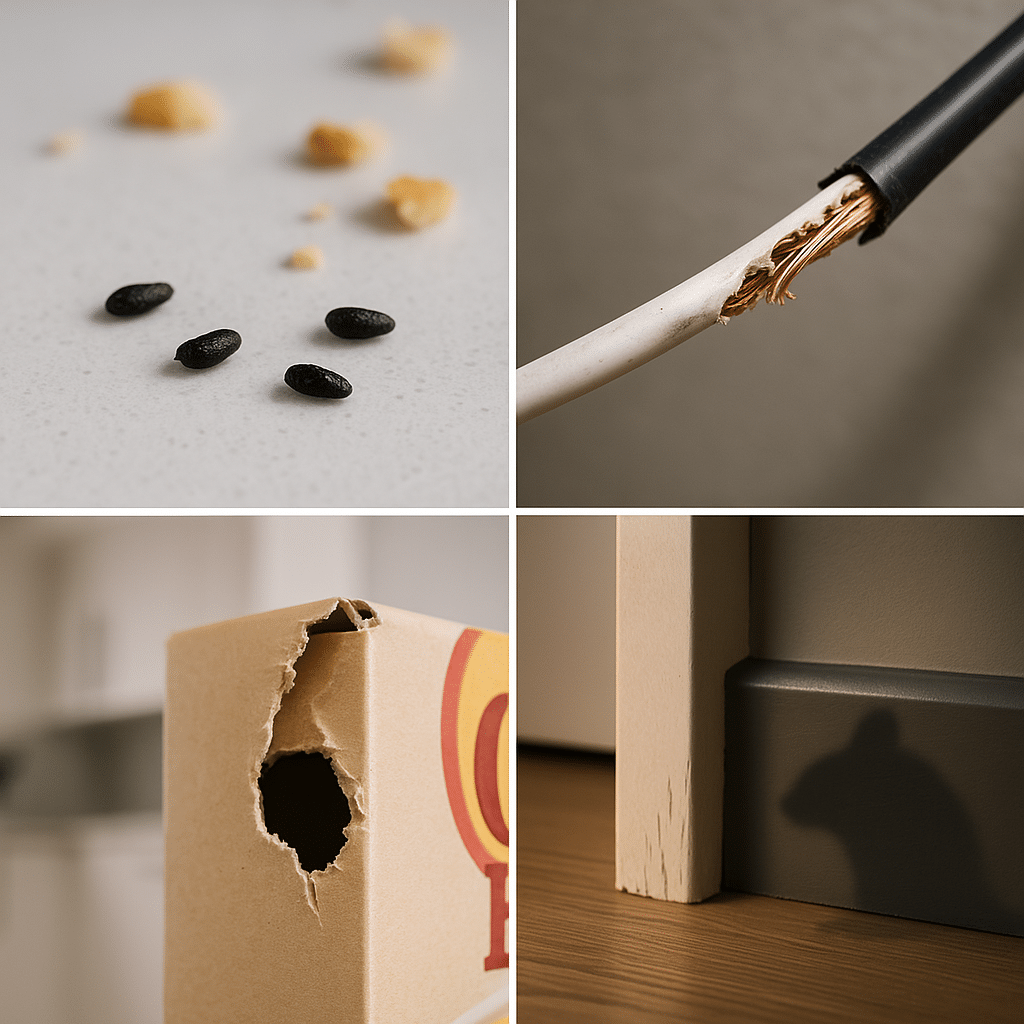
Nocturnal Noise
You are typically hearing scratching or scurrying, either behind the walls or ceilings after the sun goes down, is the first sign.
Droppings
Small, black, rice-sized droppings in close proximity to food storage, drawers, or underneath sinks is a significant sign.
Nesting Supplies
Mice will gather together shredded paper, insulation or fabric or any soft material to make their nests. These could either be located in a box or down in the corners of appliances.
Chew marks
Rodent teeth continue to grow until they gnaw something. You may see chew marks on baseboards, plastic containers, cardboard, electrical wires etc.
Musky odor
Mice also leave behind an unpleasant musky odor that will accumulate, and become even more potent, as you get closer to the nesting area or where they have traveled.
Why Homes in Burlington Are Especially Vulnerable

Older homes, unfinished basements and being in a seasonal climate change leaves continued possibilities for rodent infestations in Burlington.
A poorly constructed home often has openings in construction that allows for mice to enter the home from the garage, around the foundation or roofline. If you have not had your home sealed by a professional yet, now is a great time.
How to Stop Mice Before They Get Cozy
1. Seal Off Entry Point
Start with a thorough inspection of the home. Look for gaps around doors, windows, plumbing, and siding. Use some steel wool to fill the gaps, and the caulk or other weather resistant sealant. unlike foam alone, mice cannot chew steel wool.
2. Declutter
Rodents use cardboard boxes, unused furniture, old fabric to nest. Keep your storage area clear of clutter and cleanliness. Stack boxes they can rest on the floors. If possible switch to plastic bins with lids to contain items.
3. Keep Food Sources Secure
Store dry goods, grains, and pet food in airtight containers. Scrub counters and clean other locations behind the stove and appliances in areas where crumbs may accumulate. Do not leave a pile of dishes or a dirty dish sponge that picks up food overnight.
4. Reduce Outside Access
Trim up trees or shrubs that are touching your roofline. Move firewood or compost piles away from your foundation. Put mesh over any vents and check for any square footage under exterior doors.
5. Improve Trash Storage
Store garbage containers outside that are sealed. Make sure it is a container that has a lid that closes all the way, and do not leave garbage bags outside.
Why DIY Solutions Often Don’t Fix The Problem

Traps or repellents will offer some relief, but they rarely, if ever get rid of the actual problem. One trap will not fix the problem of a mouse that has made a nest behind the wall, or very deep into insulation. A product in a retail store may fix the symptoms, but it is momentarily relieve and won’t get to the root cause and prevention.
If you are still seeing droppings, hearing noises, or finding new chew marks after a couple of days, you likely have a nest forming or growing.
How Our Mice Control Specialists Come Fixate the Problem for Good
As Burlington’s rodent control experts, we use a multi-faceted approach that does more than just eliminate mice.
Whole Home Inspection
We check your attic, crawl spaces, siding, edges of the roof, basement, and beyond to find every conceivable point of vulnerable entry and every conceivable nest potential.
Safe, Humane Removals
We provide tested whole-home solutions to remove mouse activity safely, protecting people and pets.
Sanitizing and Nest Removal
We disinfect surfaces, remove nests, and assist with removal of affected insulation or building material if necessary.
Permanent Exclusion
We seal off entry points using materials that mice cannot push through or gnaw through to prevent future issues.
Prevention tips and follow up
We provide simple recommendations to keep mice out and we will check in when you say you would like to, to make sure that your home stays secure from mice.
What Makes Maximum Team Different
Locally Based
Being aware of the Burlington climate and house styles makes it easy to predict seasonal issues that are often missed in DIY articles.
Customer Oriented
We provide you with upfront honesty, an abundance of care in the process, and value education as much as action. In fact, we have been advised many of our customers have reported feeling more confident and safe in their homes following our service.
Non-Toxic Options Available
Our tools and methods have notable alternatives to sprays that can be used on the homes of non-human pets, children, or anyone concerned with chemical products.
Customer Story: A Rapid Solution To An Escalating Solved Situation
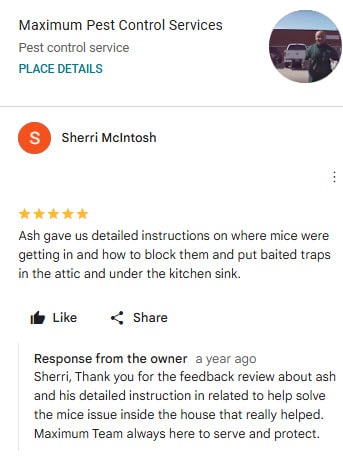
“Ash gave us detailed instructions on where mice were getting in and how to block them and put baited traps in the attic and under the kitchen sink.” – Sherri McIntosh
Don’t Wait until Spring — Address the Concern Now
By the time spring arrives, mice could have been living in your home for several weeks and will only be more problematic to remove once nesting have occurred, and they have caused damage. Reach out to us now to conduct an inspection of your home, even if you only saw one or two signs of mice. February is the best time to prevent the influx of calls about rodent concerns during March and April.
Lets Get Ahead of Nesting Season
Your home should be a warm welcoming, safe place for you and not for rodents! With some expert help, straightforward preventative measures and some forward thinking you can keep your home mouse-free the entire winter.
Contact Maximum pest control services Team insured and bonded today for a no-obligation passive inspection and start February out the right way.