

Mice in Oakville Homes: What Actually Works (and What Most People Get Wrong)
Mice problems in Oakville homes are solved by combining three steps: removing active mice with properly placed traps, sealing all entry points as small as 6 mm using metal and mesh materials, and eliminating food sources that attract them. Methods like spray foam alone, steel wool, or indoor poison typically fail because they don’t stop new mice from entering. Long-term control depends on exclusion, not just baiting or trapping.
Quick Answer:
To stop mice in your home, trap or bait the ones inside, seal all exterior entry points, and remove food sources so they can’t come back.
A practical guide to identifying, removing, and permanently keeping out mice — written for homeowners who are tired of band-aid fixes.
- 6mm Gap a mouse needs to enter your home
- 3–6 Litters per year, per breeding pair
- 2wks Time for a small problem to become a real infestation
- 4–8 Traps needed for a moderate infestation
Part One
Why Mice Choose Your Home — And Why They Come Back
Mice aren’t random. They’re practical. They follow food, warmth, and easy access. In Oakville specifically, the combination of mature ravines, green corridors, and a mix of older and newer housing stock creates ideal conditions. Mice don’t have to travel far, and once they find a reliable route into a warm house, they use it. Repeatedly. Other mice find it too.
The three things that bring mice indoors are always the same: a way in, something to eat, and somewhere to nest undisturbed. Remove any one of those and you make your home significantly less attractive. Remove all three and you’ve actually solved the real problem.
What food sources are drawing them in?
Open pantry bags, crumbs under appliances, pet food left in bowls overnight, compost stored close to the back door, and bird feeders near the foundation and the backyard. None of these things seem like a big deal individually. Together, they signal to a mouse that food is available and easy to get.
Older homes vs. newer builds — does it matter?
Older homes tend to have more gaps — aging brickwork, worn siding, decades of utility additions that were never properly sealed around. But newer builds aren’t exempt. Unfinished soffits, fresh utility chases, and vents without covers are common in homes under ten years old. The real factor isn’t age. It’s condition and whether gaps have been properly addressed.
Catching mice without closing entry points is like mopping a flooded floor with the tap still running.
How fast does one mouse become an infestation?
Faster than most people expect. Mice breed several times a year, and a small presence in October can become a genuine infestation by December if nothing changes. The moment you see droppings, hear scratching, or find a gnaw mark on packaging — that’s the right time to act by calling a pest control service. Not two weeks later.
Does the season matter?
Yes. Most homeowners notice mice from late fall through early spring, when cold weather pushes rodents inside. But a house with open food and accessible entry points will attract mice in July as easily as January. Seasonal awareness is useful; treating the problem as purely seasonal is a mistake to avoid.
Part Two
How to Identify a Mouse Problem Before It Gets Worse
Most infestations aren’t discovered the day they start. Mice are cautious and nocturnal. By the time most homeowners confirm what they’re dealing with, the mouse has already established a route, found a food source, and in many cases started nesting. Knowing the early signs matters.
What does a mouse problem actually look like?
What are the first signs to look for?
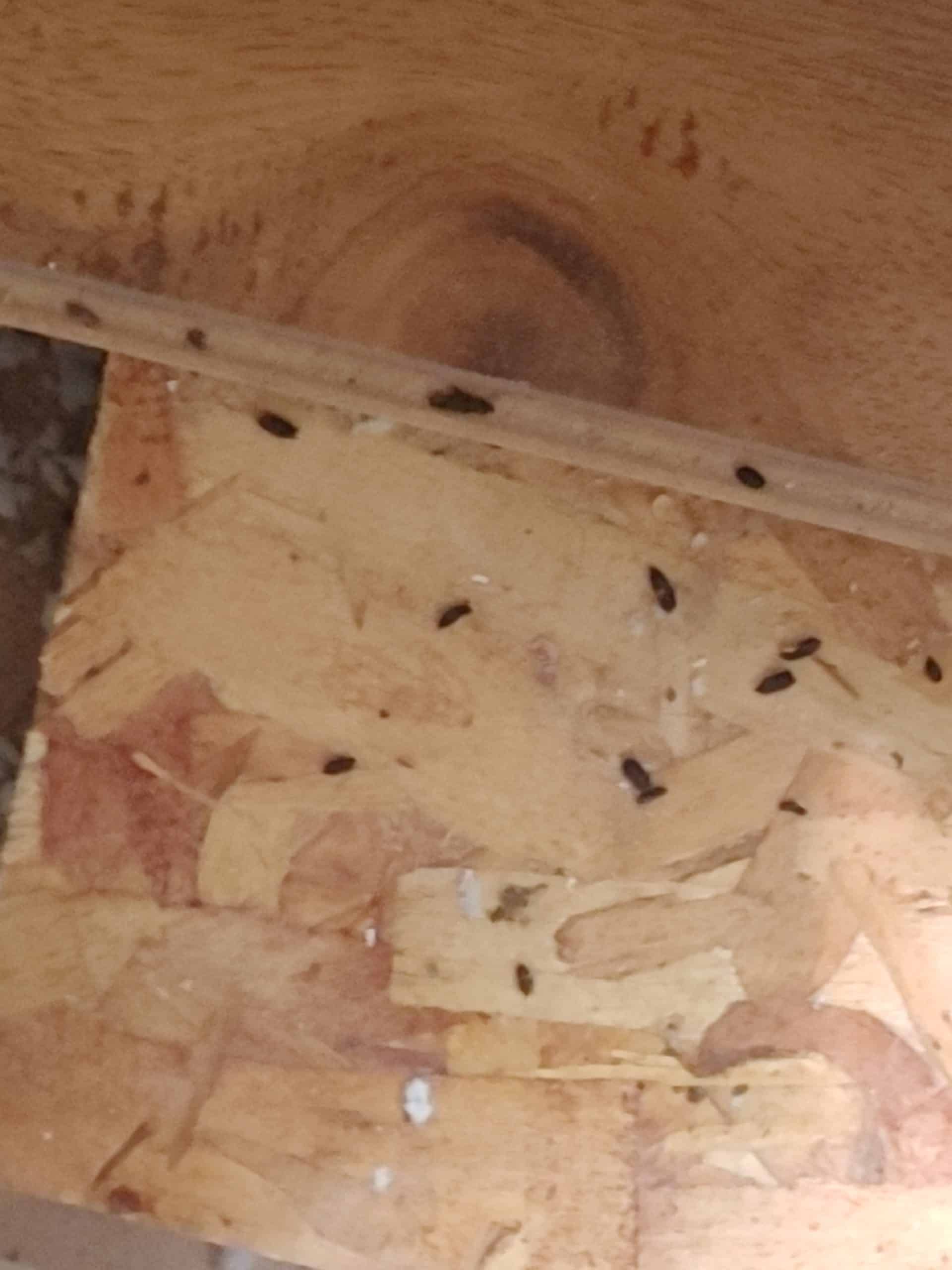
Small dark droppings — roughly 3 to 6 mm, pellet-shaped — are usually the first thing people notice. You’ll find them clustered behind appliances, under sinks, inside lower kitchen cabinets, or along baseboards. A faint musky smell in enclosed spaces is another early indicator. Tiny gnaw marks on food packaging, cardboard boxes, or wood trim follow. Mice are not scratching with their nails — they are constantly gnawing to wear down their teeth, which grow continuously.
If they don’t wear them down, their teeth can overgrow, making it difficult to close their mouth and causing discomfort. The last sign people usually connect is the scratching sound inside walls at night.
Is it mice or something else?
Mice leave a specific pattern: small droppings, gnaw marks on wiring or packaging, and scratching sounds after dark. Rats leave larger droppings (12 to 18 mm), and their damage is more obvious — structural gnawing, larger holes. Squirrels are louder and tend to make noise during daylight hours. Insects don’t chew wires or leave nesting material. If you’re not certain, a professional pest control inspection will identify exactly what you’re dealing with.
Where do signs usually appear first?
The kitchen, almost always. Behind the fridge, near baseboards, inside lower cabinets. Basements and attics come second — both offer undisturbed nesting space and material. Droppings near a food source are almost always the first clear confirmation.
Why only at night?
Mice are nocturnal. They move through wall voids, ceiling spaces, and floor cavities after dark, when the house is quiet and still. A faint but regular scratching sound in the same spot each night usually means a mouse has established a route through your walls. Persistent noise suggests more than one.
Don’t Wait on These Signs
If you find droppings behind an appliance, hear scratching inside a wall more than once, or notice gnaw marks on food packaging — these are not isolated incidents. Each one is a signal that mice have already found a reason to stay.
If you find droppings behind an appliance, hear scratching inside a wall more than once, or notice gnaw marks on food packaging — these are not isolated incidents. Each one is a signal that mice have already found a reason to stay.
Part Three
Entry Points: Where Mice Are Actually Getting In
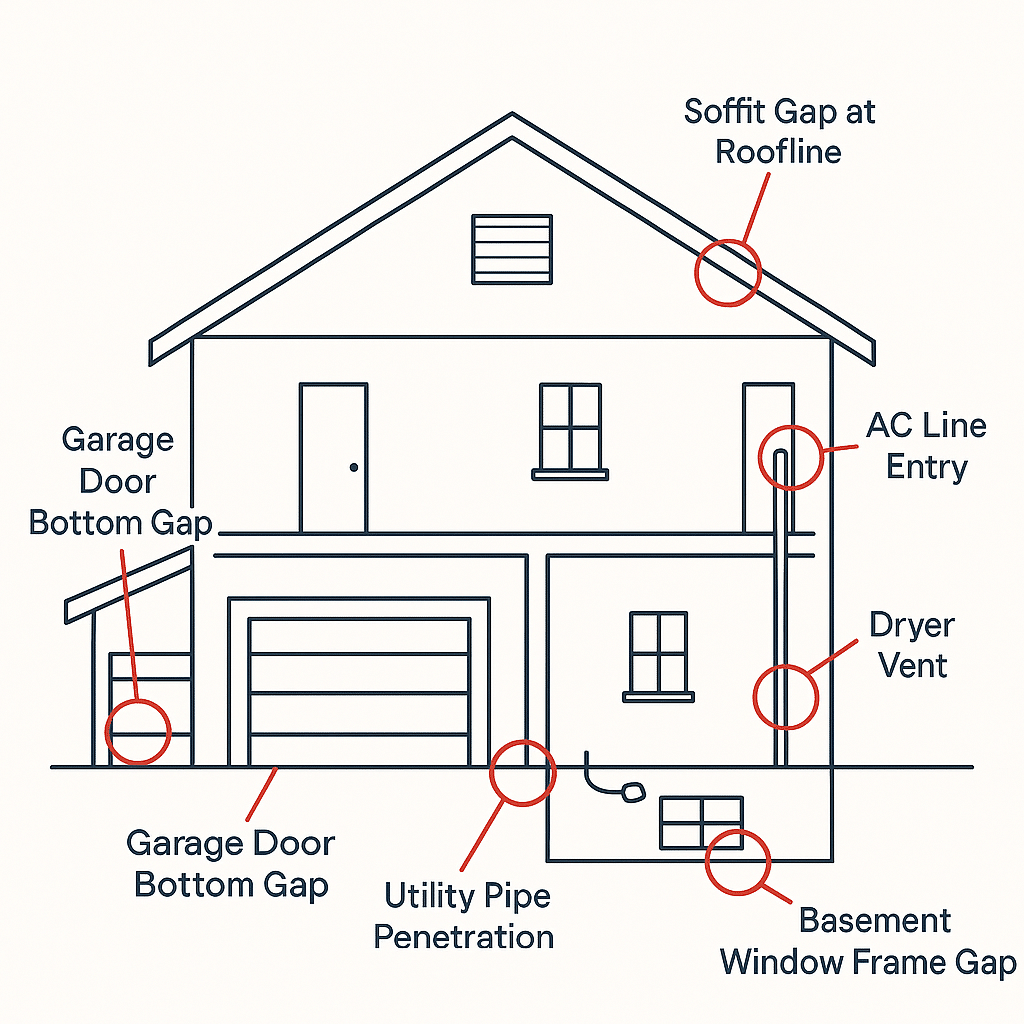
This is the part most homeowners get wrong — not because they’re careless, but because the real entry points aren’t obvious. A mouse needs a hole about the size of a coin. That’s 6 to 7 millimeters. Small cracks near a pipe, a slightly warped door frame, a torn vent screen — any of these is enough.
The most common access routes in Oakville homes
- Gaps around gas meters, water lines, and electrical conduit entering the house
- Cracks in foundation brickwork or mortar joints, especially in older homes
- Open or damaged attic vents and soffit edges
- The gap between siding and the foundation, particularly where two materials meet
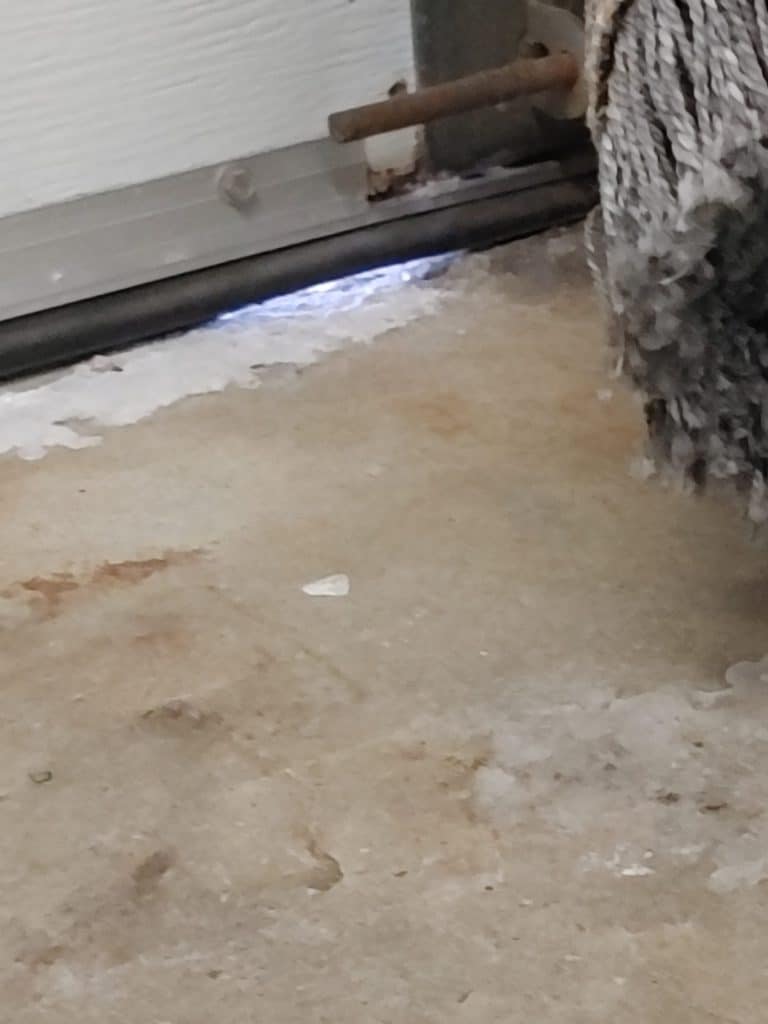
- Garage doors that don’t seal flush at the bottom — mice use garages as a staging area
- Poorly sealed dryer vents and bathroom exhaust fans
- Weep holes in brick facades — small intentional gaps in mortar that mice exploit
- Roof and chimney transitions, especially on older homes
What homeowners consistently miss
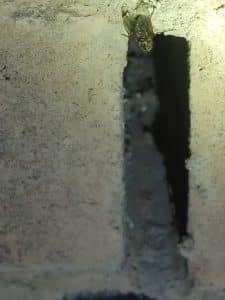
Weep holes in brick are among the most overlooked entry points — they’re small, intentional, and easy to forget about. The soffit-to-fascia junction is another. Dryer vents without proper covers. Spray foam around pipes that’s been there for years and has quietly cracked. These aren’t exotic weak spots. They’re on almost every home in some form, and mice find them without any trouble.
“Mice don’t need a gap you can see easily. A hairline crack beside a pipe fitting is enough. That’s why a proper inspection starts outside and works systematically — not by instinct.”
Can mice come in through the roof?
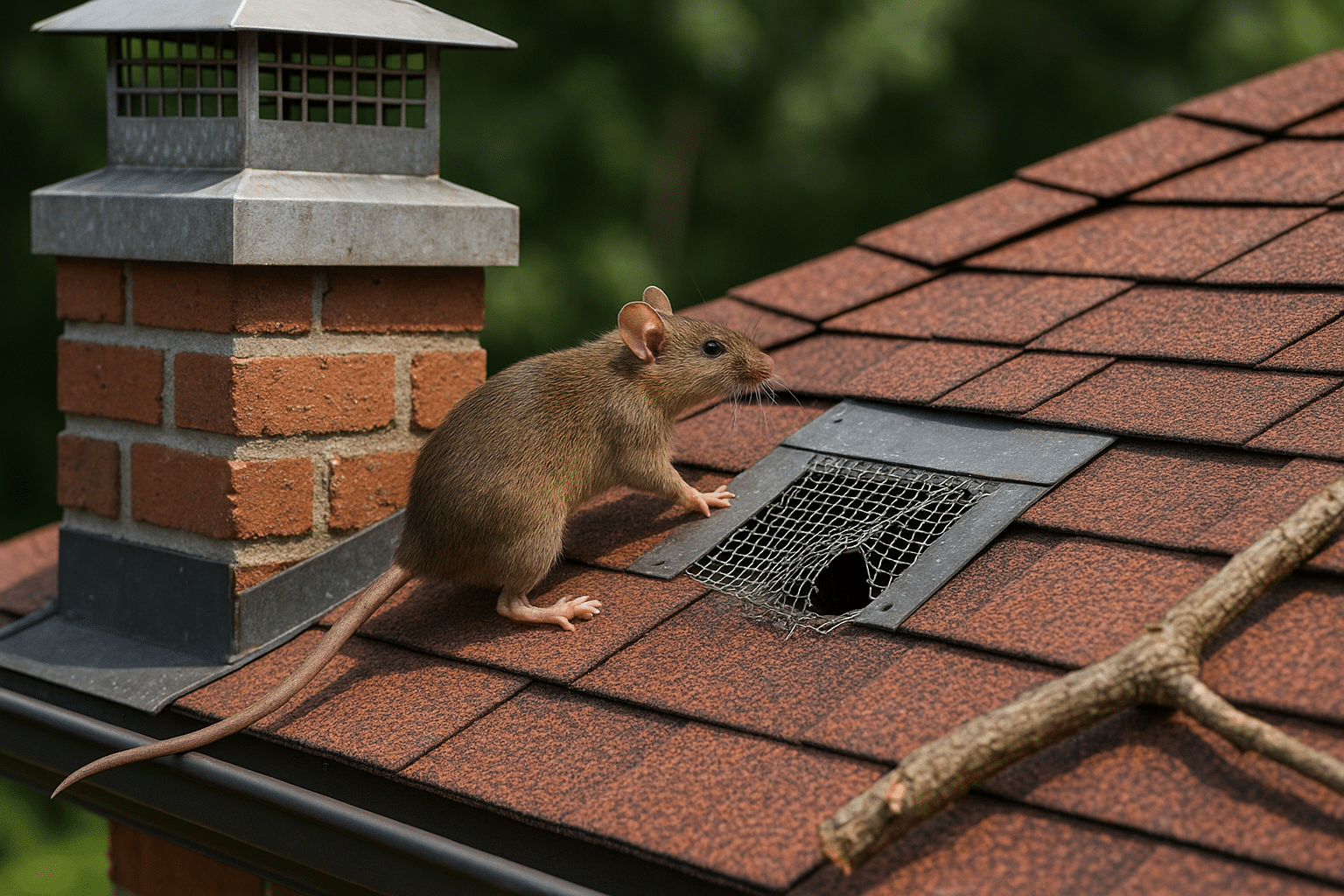
Yes. Attic vents with damaged or missing screens are a direct route. Once in the attic, mice travel down through wall cavities, often staying hidden for weeks before signs appear in living areas. Chimney openings and loose soffits are also used. These high-up entry points are what makes professional inspections worth the cost — most homeowners simply can’t access or assess these spots safely.
Part Four
Sealing: What Materials Work and What Fails in Ontario Winters
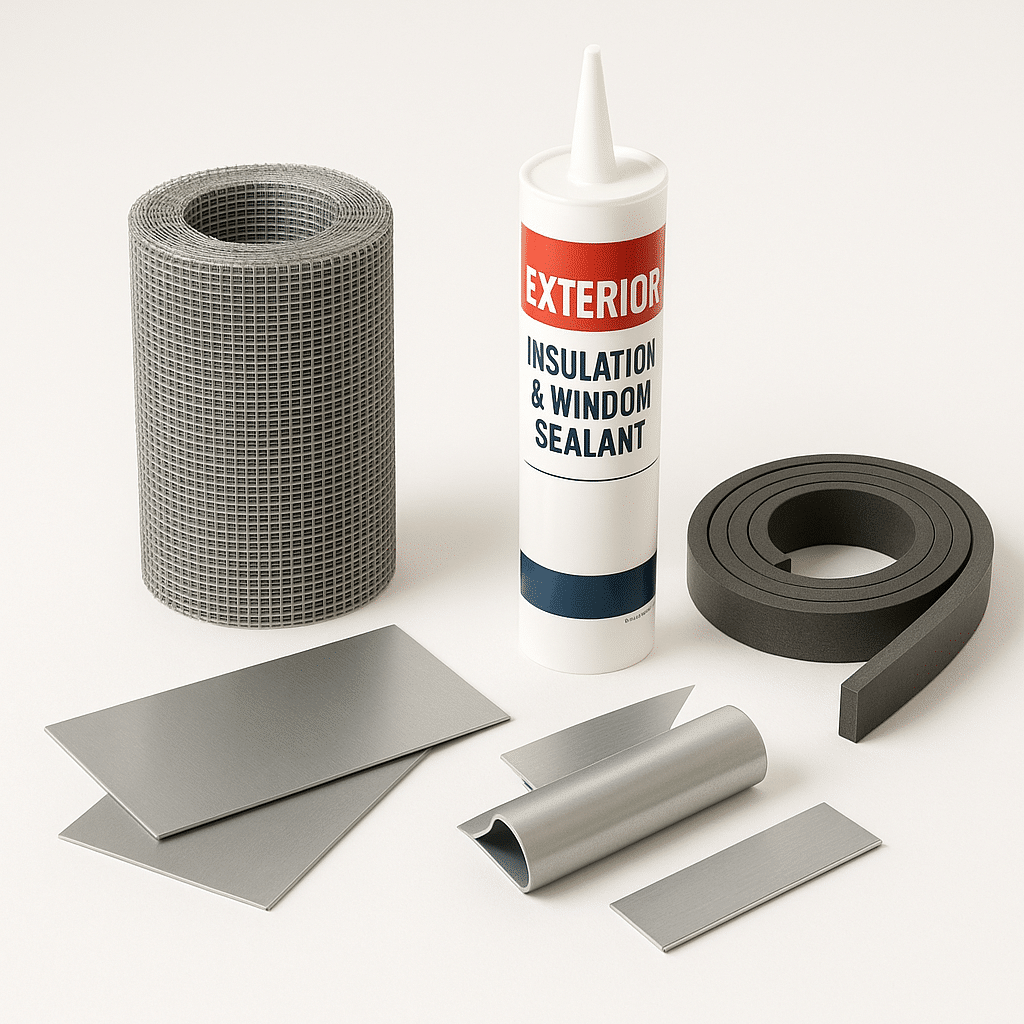
Sealing entry points is the only part of mouse control that lasts. Trapping reduces the current population. Sealing stops the next one from moving in. Get the sealing wrong — wrong materials, wrong application, or just missing spots — and you’re back to square one after the first hard freeze.
What actually holds up
Metal flashing, hardware cloth, copper mesh, and exterior-grade sealants used together. The key is layering. No single material is foolproof. Metal mesh backed by a durable sealant, properly installed, survives Ontario’s freeze-thaw cycles and doesn’t give mice anything soft to chew through.
| Material | Stops Mice? | Lasts in Ontario Weather? | Best Use |
|---|---|---|---|
| Metal flashing / hardware cloth | Yes | Yes | Primary barrier over gaps and vents |
| Copper mesh | Yes | Yes | Packing inside gaps before sealant |
| Exterior-grade sealant | With backing | Yes | Final layer over mesh or metal |
| Spray foam alone | No | No — cracks & shrinks | Filler only, never primary barrier |
| Steel wool alone | Temporary | Compresses over time | Short-term patch, not a solution |
| Fine-mesh vent covers | Yes | Yes | Vents that need airflow maintained |
Why spray foam fails
Spray foam is soft enough for mice to chew through with minimal effort. It also shrinks after curing and can crack after the first serious frost. Used as a filler inside a metal-backed gap, it has a role. Used alone as the only barrier, it typically fails within a season or two.
Should vents be blocked completely?
Never. Vents exist for airflow and moisture control, and blocking them creates its own set of problems. The correct solution is fine-mesh screens or metal covers that let air through but keep mice out. A professional can choose and install the right screen without compromising your home’s ventilation.
DIY vs. professional sealing
Some of it is manageable on your own — visible gaps in accessible spots, with the right materials. The harder work is everything above eye level and behind surfaces: rooflines, soffit junctions, siding gaps, attic vents. Those are the spots where DIY (Do It Yourself) sealing tends to leave holes, literally. If you’ve had mice before and patched things yourself, and the mice came back — that gap you missed is almost certainly why.
Part Five
Removing Active Mice: Trapping Done Right
Once mice are inside, they need to be removed. The order matters: Baiting or trapping first to reduce the active population, sealing to prevent re-entry. Doing one without the other is wasted effort.
Where should traps be placed?
Along walls and in corners — not in open floor space. Mice hug edges. They rarely cross open areas. Place traps near appliances, behind the fridge, in basements, in areas where droppings were found, and near suspected entry points. Multiple traps in a line along a wall outperform a single trap in the middle of a room.
How many traps does a typical home need?
A moderate infestation in an average-sized home usually needs somewhere between four and eight traps placed strategically, with the count adjusted as activity decreases. The right number depends on the size of the space and how many active areas there are.
How long before the problem clears?
A small infestation addressed quickly — with baiting, trapping and exclusion work done all together — can be largely resolved within one to two weeks. Larger infestations, or those where mice are nesting in hard-to-reach areas, take longer and usually need a follow-up visit.
Why do mice sometimes ignore traps?
Mice are cautious around new objects in their environment — especially if the trap is placed in open space, bait is stale, or the trap style is unfamiliar. Placing traps in quiet, established runs along walls, using the right bait, and rotating trap types when activity stalls — these are the adjustments professionals make that DIY setups often skip.
Part Six
Poison: Why Most Professionals Avoid It Indoors (Mice VS Rats)

Rodenticide gets used more than it should. It feels decisive — put it out, mouse eats it, mouse dies. The part people underestimate is what happens next. A mouse that has been poisoned doesn’t usually perish outside. It retreats into a wall cavity, a ceiling space, or inside insulation — somewhere unreachable.
With mice, any odour is usually minimal because of their smaller size, and in many cases it may not be noticeable. However, the location still matters, and issues can occur if the carcass is in a confined space.
With rats, the situation is different. Their larger body size means strong odours can develop and linger for weeks when poison is used indoors. This is why poison is not recommended inside the home for rat control.
In both cases, poison does not address how rodents are getting in. Trapping and proper sealing remain the more reliable way to deal with the problem and prevent it from returning.
What about over-the-counter rodenticides?
Consumer-grade poison is less targeted, harder to control, and doesn’t come with the placement expertise that makes professional use safer. More importantly, it doesn’t address the entry points. You might reduce the current population, but without sealing and blocking, new mice will follow the same routes. The cycle continues non-stop.
When is poison appropriate?
In exterior, tamper-resistant bait stations — placed outside the home as part of a broader strategy — licensed pest control services can use approved rodenticides safely. Inside the home, trapping and exclusion should be the primary approach. The goal is a method that doesn’t need to be repeated every season.
Secondary Poisoning Risk
A pet eating a mouse that consumed rodenticide can experience secondary poisoning — this is a documented and real risk. If poison is used anywhere near your home, tamper-resistant exterior stations are the controlled option.
A pet eating a mouse that consumed rodenticide can experience secondary poisoning — this is a documented and real risk. If poison is used anywhere near your home, tamper-resistant exterior stations are the controlled option.
Part Seven
What Professional Mice Control Actually Includes
A lot of homeowners assume professional pest control means spraying something and leaving. For mice, the actual process is more involved — and the sealing component is what separates a one-time fix from a permanent one.
What happens during a professional inspection?
A full walk-through, inside and out. The technician checks for droppings, gnaw marks, nesting material, and air-gap evidence. Every utility penetration, vent, garage transition, and attic or basement access point gets looked at. From there, a targeted plan is built — not a template, but something based on what’s actually happening in your specific home.
How do professionals find entry points homeowners miss?
Experience, mostly. Knowing where homes typically fail — soffit junctions, plumbing penetrations, garage-to-house transitions, weep holes in brick — and knowing what to look for in those spots. Combined with systematic checking of areas that are easy to overlook, this is what catches the gaps a casual walk-around misses.
How long does treatment take?
An initial visit typically runs a few hours — inspection, trap placement, and whatever sealing can be completed that day. More complex situations may need a return visit, depending on the scope of the infestation and how much rodent exclusion work is required.
Will one visit be enough?
For a small, early-stage problem caught quickly, often yes. Multiple entry points, nesting in hard-to-reach areas, or a home with significant structural gaps usually means follow-up is needed. A written guarantee and a clear follow-up plan removes the guesswork — you either have mice or you don’t, and you should know which.
Is it safe for kids and pets to get professional help?
Yes, when done correctly. Licensed technicians apply materials in the minimum amounts needed to address the problem, explain the plan before starting, and focus on trapping and exclusion rather than broad chemical application. The approach is targeted — not a precautionary spray of everything.
Summary
The Short Version: What to Do if You Have Mice Right Now

If you’ve spotted signs of mice — droppings, gnaw marks, nighttime scratching — here’s the sequence that actually works:
- Don’t wait to “see if it gets worse.” Act on the first confirmed sign.
- Remove accessible food sources immediately — sealed containers, no overnight pet food, compost away from the house.
- Set traps along walls and near appliances, in the kitchen and basement first.
- Get an inspection to identify entry points — don’t guess, don’t just look around the foundation and call it done.
- Seal with proper materials: metal, mesh, and exterior-grade sealant in combination.
- Don’t rely on spray foam, steel wool, or consumer-grade poison as standalone solutions.
- If the problem has returned before, professional exclusion work is the part of the process you haven’t done yet.
Mice aren’t a sign that you keep a dirty house. They’re opportunists, and the environment gives them plenty of reasons to try. What determines whether they stay is whether your home gives them a way in and a reason to stay. Remove those, and the problem stays outside where it belongs.
Frequently Asked Questions
How do mice get into homes?
Through small gaps around pipes, vents, foundations, and doors.
Do mice go away on their own or not?
No. Without changes, the problem grows.
Is one mouse a problem?
Yes. It usually means more are nearby.
What works best to remove mice?
Baiting – trapping combined with sealing entry points.
Why do mice keep coming back?
Because the outside entry points were never sealed.
Final Note
Maximum Pest Control Services — Oakville & Halton Region
Serving local homeowners with inspections, exterior exclusion, and monitored baiting trapping programs. For questions or to book an inspection, visit maximumpestcontrol.ca or call us directly at (905) 582-5502. Written guarantees available on all exclusion work.
Serving local homeowners with inspections, exterior exclusion, and monitored baiting trapping programs. For questions or to book an inspection, visit maximumpestcontrol.ca or call us directly at (905) 582-5502. Written guarantees available on all exclusion work.

Recommended Posts