
Why You Still Have Mice After Wildlife Removal
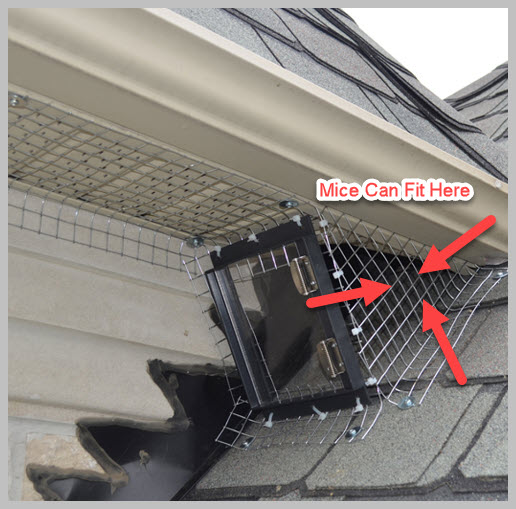
When you hire a wildlife removal exclusion contractor to install one-way doors so the large animal can exit and not be able to re-enter, and he leaves the open entry point blocked with 1-inch-size gap mesh wire, they’re unknowingly creating a new problem for your house. That mesh wire becomes a ladder for mice, which can easily climb through the 1-inch openings and establish a colony in your house attic. The solution is simple: call your wildlife contractor back to remove the one-way door and properly seal the access opening once the larger animals have left.
The Standard Wildlife Exclusion Process (And Where It Goes Wrong)
Here’s what typically happens when you hire a wildlife exclusion company to deal with a wildlife situation such as raccoons, squirrels, or other larger animals hiding in your attic:
- They identify the entry points
- They install one-way doors so animals can exit but can’t return
- They block the area behind these doors with galvanized mesh wire (usually 1-inch squares)
- The animals leave within a few days or weeks
- The contractor considers the job complete and leaves.
But there’s a critical step that is missing. That mesh wire with 1-inch openings?
It’s perfectly sized for mice to climb right through the opening that only got blocked by the wire without actually sealing the actual access behind it but only covering it with the chicken wire.
Why 1-Inch Mesh Doesn’t Stop Mice?
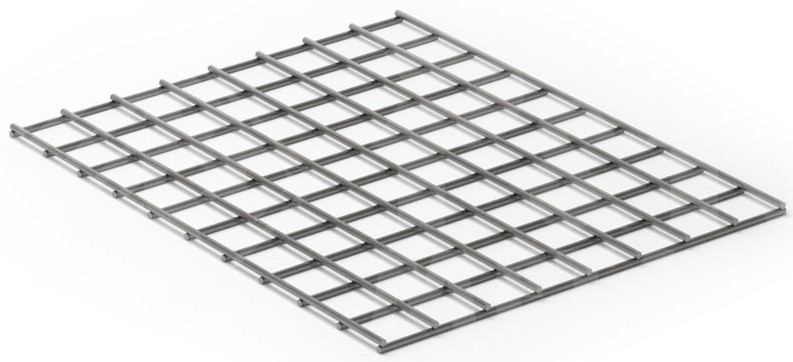
Mice need surprisingly little space to squeeze through—about the diameter of a pencil, or roughly 1/4 inch. But even when the holes are larger than their body width, mice are exceptional climbers. They treat that 1-inch galvanized mesh like a climbing wall.
They can scale the walls vertically with ease, navigate around corners, and access your attic through the very same entry point that was just “secured.”
What Happens After the Larger Animals Leave?
Once the raccoons or squirrels have moved out, that one-way door is still there. So is the mesh wire behind it. Your contractor might assume the job is finished, but you’ve now traded one wildlife problem for another.
Mice will find that mesh-covered opening. They’ll climb to squeeze through it. And once they’re in your attic, they don’t stay put. Over time, they:
- Establish nesting sites in different locations of the house
- Chew through electrical wiring by filing their teeth (a genuine fire hazard)
- Contaminate the space with droppings and smelly ammonia urine
- Find routes down into your living spaces through wall voids
- Increase in numbers rapidly (a single female can have 5-10 litters per year)
You might not notice right away. Mice are nocturnal and very quiet. By the time you hear scratching or find droppings, you likely have more than just a couple of mice.
The Real Solution: Complete the Job!
After the wildlife exclusion contractor confirms the larger animals have left (usually after 3-10 days), they need to come back and finish the work:
Remove the one-way door completely. It served its purpose and was done. Leaving it in place serves no function and can actually create a new problem.
Remove or reinforce the mesh. If 1-inch mesh was used as a temporary barrier, it needs to be removed. The opening should be sealed with solid materials—metal flashing, wood, or hardware cloth with 1/4-inch spacing for best results.
Seal it permanently. The entry point should be closed so nothing can get in. No gaps, no climbing surfaces, no compromises.
This isn’t an optional upgrade. It’s the completion of the wildlife exclusion work.
Why Don’t Some Companies Come Back?
Not all wildlife exclusion companies follow through with this final step. Some reasons include:
- They consider the job done once the target animal is gone
- They don’t fully understand mice behavior and its climbing abilities
- Their contract didn’t explicitly include post-exclusion sealing
- They’re simply not thorough in their approach once done
This isn’t necessarily malicious. Many companies focus exclusively on the larger animals they were hired to remove and don’t think about secondary pest issues.
But you’re paying for wildlife exclusion, not wildlife relocation with a side of extra mice infestation.
What You Should Do?
If you’ve recently had wildlife exclusion work done and the contractor installed one-way doors with 1-inch mesh barriers:
- Call them back. Ask when they plan to remove the one-way doors and properly seal the openings. If this wasn’t discussed initially, bring it up now.
- Check your contract. Good exclusion companies include follow-up visits in their service agreement. If yours doesn’t mention it, that’s a red flag.
- Inspect the work yourself. Once they say the job is complete, look at the sealed entry points. You shouldn’t see mesh wire with large openings behind it left as a permanent barrier.
Watch for signs of mice. Even if the company did return, stay alert for scratching sounds, droppings, or visible gnaw marks. Mice easily can find other entry points, but the main wildlife access areas should be completely secured.
The Bottom Line
Wildlife exclusion isn’t just about getting raccoons or squirrels out of your attic. It’s about keeping all animals—including mice—from getting in. When contractors leave mesh wire with 1-inch openings as a permanent barrier, they’re creating an entry point for a different kind of pest problem to occur.
Don’t assume the job is finished when the larger animals are gone. The work is only complete when every entry point is properly sealed with materials that mice can’t climb through or squeeze past.
Need proper mice and wildlife exclusion that actually keeps all pests out? Maximum Pest Control Services completes the job the right way—from initial exclusion through final sealing. Maximum team doesn’t leave openings for mice to exploit. Call Maximum Pest Control Services insured and bonded team to inspect your home or review existing exclusion work to make sure your house is fully excluded and protected: (905) 582-5502.