

How to Detect Mice in Your Kitchen and Basement (Milton, Oakville, Burlington & Hamilton)
Quick Signs & Prevention Summary
Understanding how to detect Mice in Your Kitchen is crucial for maintaining a pest-free home.
- A mouse infestation can disrupt your daily routine and create health risks due to the bacteria carried by mice as well as potential fire hazards caused by damage to your electrical wires.
- Some areas within the Greater Toronto Area (GTA) experience high levels of seasonal rodent migration due to the recent influx of new suburb developments and agricultural land being developed into urban housing.
- Kitchens are full of food sources, making them prime locations for Mice in Your Kitchen.
- Basements offer an area free from light or other humans (or pets) and mice can easily find an undisturbed area close to food for nesting material.
- Many people experience the strange sounds of tiny creatures running around on their floors before they even know that they have a mouse infestation.
- Food storage areas or cabinet bases may be the most obvious places to look for rodent droppings.
- Check your kitchen for damaged food box packaging or frayed electrical wiring.
- If you smell a strong ammonia-like odor, then this is an indication of mouse urine.
- Mice can get into your home through an opening as small as a dime.
- By sealing up any cracks and holes around pipes, vents, and baseboards with steel wool, silicone caulk, and other sealants.
- It’s a good idea to contact a pest control specialist if you find multiple signs of rodent infestation.
A mouse infestation can disrupt your daily routine and create health risks due to the bacteria carried by mice as well as potential fire hazards caused by damage to your electrical wires.

Some areas within the Greater Toronto Area (GTA) experience high levels of seasonal rodent migration due to the recent influx of new suburb developments and agricultural land being developed into urban housing. These seasonal changes will increase the likelihood of rodent infestations.
If you know what signs to look for, especially in your kitchen and basement, you will be able to identify potential problems earlier.
Kitchens and Basements Attract Mice Because of Access to Food and Shelter.
Kitchens are full of food sources. Basements offer an area free from light or other humans (or pets) and mice can easily find an undisturbed area close to food for nesting material.
During the cold months of the fall or winter, most mice will seek out shelter warmer areas. The recent addition of many new homes in Milton has resulted in breaking up of the areas that mice previously occupied and they are now looking for different nesting areas inside homes. Even though the process of developing new housing has occurred for many decades in the Hamilton/Burlington areas, they still have a large number of mice because of the presence of many foundation gaps and older vents.
Signs of Mice in Your Kitchen and Basement
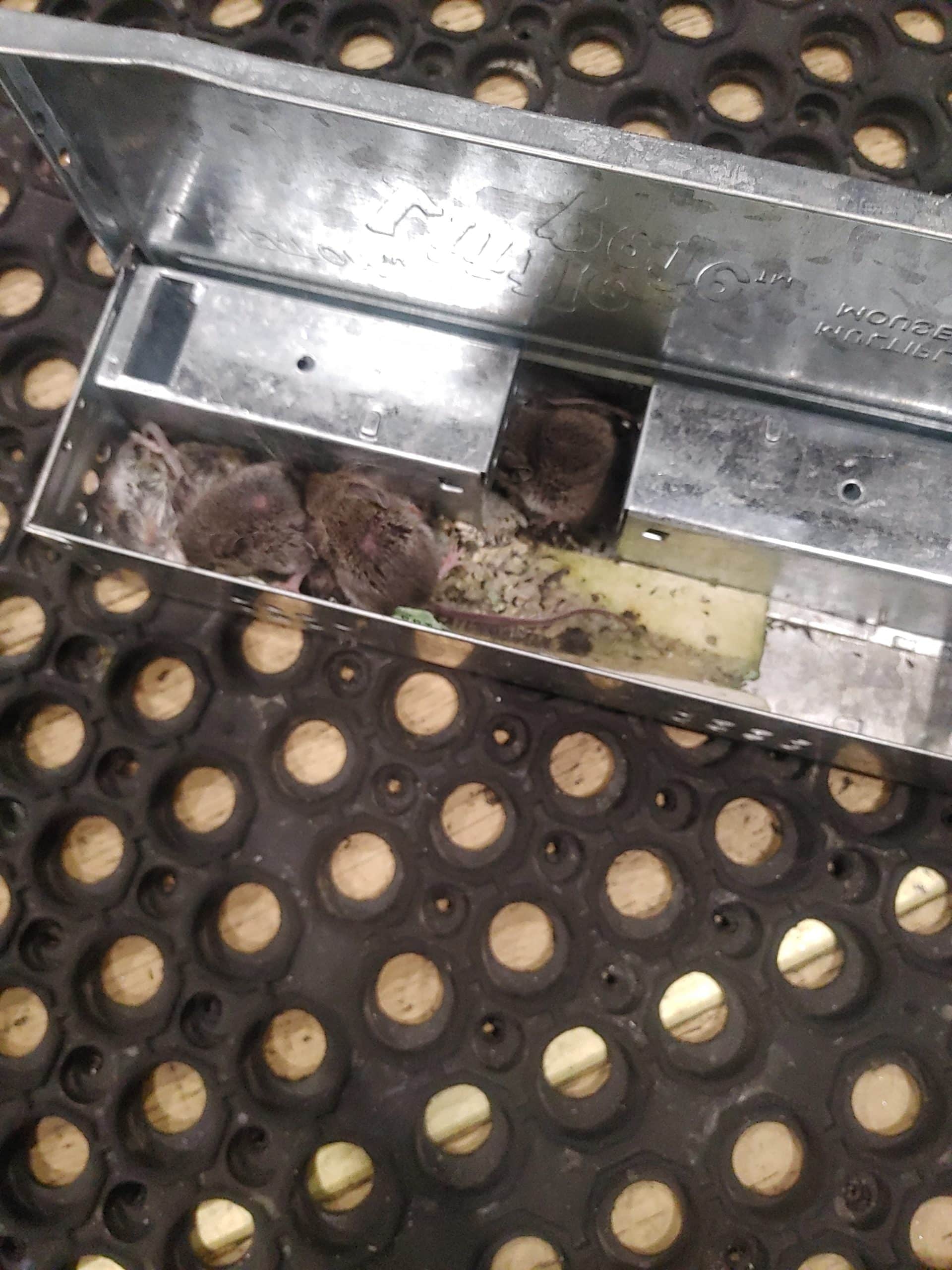
1. Scurrying Noises Behind Walls
Many people experience the strange sounds of tiny creatures running around on their floors before they even know that they have a mouse infestation. If you hear little fast-paced noise coming from between your walls while trying to fall asleep, that is one of the most likely indications of a growing mouse infestation. If you hear these unexplained noises, listen carefully during the early morning and late evening hours. Check all your wall studs near the cabinets in the kitchen and along the top of the ceiling in the basement.
2. Rodent droppings
Food storage areas or cabinet bases may be the most obvious places to look for rodent droppings; many kitchen cabinets are home to at least one or more large boxes filled with food. While the kitchen may not seem like a common place to find mouse droppings, some nests are found in basements (especially in homes without basements) where there is little or no light and the ground is damp.
3. Chewing through packaging and wiring
This is something that occurs frequently in homes with mice. Check your kitchen for damaged food box packaging or frayed electrical wiring, while also checking unfinished areas of the basement. Chewed-through food packaging can include: insulation, soft wood, and plastic bins.
Wires that have been chewed through are extremely dangerous and need to be immediately assessed for safety issues.
4. Pet behavior
In general, you should pay attention to what your pets are doing before you ever spot a mouse in your home. If your dog or cat shows sudden signs of dislike for their food, and they seem to have a different reaction to a smell under the fridge, look into it immediately. Animals can pick up on sounds and smells that we cannot.If you’re noticing a persistent mouse problem, it’s likely that you’re not looking closely enough.
5. Nesting materials found in hidden drawers or boxes
Mice build their nests from soft materials and you’ll likely encounter shredded fabric, insulation, paper or cardboard in warm, out-of-sight places like behind a stove or in an area that’s cluttered in a basement.
A single nest will indicate a larger infestation nearby, even more so if there’s evidence of food sources and droppings in proximity.
6. Strong urine odor in small spaces
If you smell a strong ammonia-like odor, then this is an indication of mouse urine. It will be found in places like under cabinets below the kitchen sink, in the basement closet, or the pantry of a home. This is a common mark of an infestation, and the smell of mice and their urine is evident long after the population increases.
Use your nose to your advantage; investigate the source of any odors immediately.
7. Tiny footprints or tail drag marks in dust
In dusty areas of basements look for tiny mouse footprints or trails. You can see them better with a flashlight angled near the ground. If the prints are fresh, then they belong to an active infestation.
Reasons for Mice to Enter Your Home
Mice do not just come into the house for no reason. Here are factors that may be luring them in.
If there are any open bags of rice, flour, pet kibble, or anything else that has not been sealed correctly, mice will enter the home looking for this type of food source. They will also take advantage of remnants of food, crumbs, or spills left unattended.
Additionally, mice can enter your home through gaps around utility pipes and underneath doors or through cracks in your foundation wall.
Lastly, if you are storing boxes of paper or cardboard in your basement, mice will find the paper or cardboard to be perfect nesting material.
Mice can get into your home through an opening as small as a dime. So, when you see a tiny gap, you need to take immediate action to seal it.
Preventing a Mouse Problem

You Can Stop Mice From Entering:
- By sealing up any cracks and holes around exterior pipes, wall vents, and baseboards with steel wool, silicone caulk, and other strong sealants.
- By storing food in metal or strong plastic containers you can buy at the hardware store rather than in original packaging.
Through regular cleaning, such as eating off of dirty dishes, leaving dirty dishes throughout the night or leaving food uncovered.
Lastly, the accumulation of boxes, paper, and fabric in your basement encourages the establishment of a mouse nesting site. Therefore, if you do not need it, do not store it in your basement.
Set traps down all high-traffic areas within your kitchen and the basement. Check your traps and relocate them as soon as possible based upon any observed activity.
When To Call A Professional Exterminator
It’s a good idea to contact a pest control specialist if you find multiple signs of rodent infestation such as nests, wires chewed through, and droppings. Local specialists in Oakville, Burlington, Hamilton, and Milton can recognize how mice move through urban and suburban environments. The sooner you act to resolve the problem, the less damage done, the fewer food sources consumed, and the less likely you are to incur costly repairs.

Kitchens and basements can be appearing clean and quiet, yet that does not mean that the mice may not be present. Be aware of subtle signs of mice and act quickly; the quicker you respond to the signs of a mouse infestation, the easier it will become to maintain your home rodent-free. If you have any concern in regards to an issue with mice in your house or business, connect with insured and bonded certified Maximum Team calling (905) 582-5502.